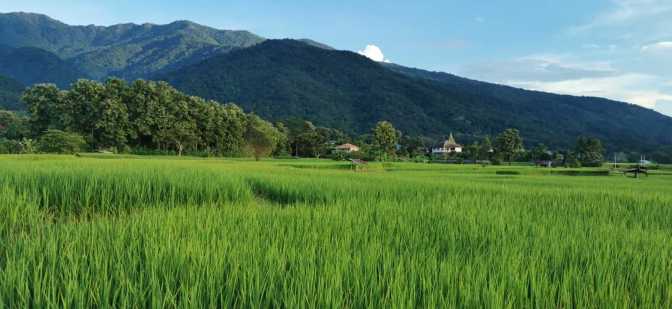
“Like a well preserved family heirloom, Nan is cherished not just for its age but for the way it still functions, bringing people together through traditions.”
Cradled in a mountain of shimmering bath froth, indulging in a contemporary open bath shielded from elements of nature under an overarching dome thatched with straws. Soft drapes of white curtain fabrics drifting to the rhythms of the breeze. A book in hand and a glass of wine at the side, seeing the world as it is and soaking up the panoramic view of mist-shrouded clouds over mountains and emerald paddy fields flanked over the horizon.
There was silence but not the type that is devoid of sights and sounds but one that instilled calm and stillness. One that reinvigorates the soul. As you start to notice and indulge in the soothing rhythms of the mountain stream just ahead, you then realize just how loud the rest of the world had been all along.
Located in upper Northern Thailand, bordering Laos, Nan province is one of the last few remaining destinations in the country not consumed by tourism. It possesses a vibrant Lanna culture enveloped in pristine nature.
The Nan Province Thailand slow travel guide 2026, featuring a trifecta of heritage, sustainability and luxury that encompasses the Kingdom’s best kept secrets also define Nan’s province emerging travel identity, earning the it accolades awarded by the United Nations (UN)
Bo Khluea Salt Wells: A glimpse into Nan’s 800-Year-Old Salt Heritage.
Best for | Cultural history, day trips from Nan City, unique local experiences

A trip to Bo Khluea, located in the eastern part of Nan is easily accessible through the scenic connected Route 3 highway – A winding road flanked by towering mountain peaks and rolling hills well loved by photographers. It is also here where the world’s few rock salt wells still exist.
Bo Khluea salt wells are 800 years old and there has been geological evidence of seawater precipitation in this region dating back 300 million years ago. A salt dome existed underground until a well was unknowingly dug into it.
There are two traditional ways of salt making.
Rock Salt Mining: Naturally grown rock salt is typically mined from salt deposits found in the earth using excavation methods and tools. They are considered to be the purest form of salt. The large clumps are then grinded into various sizes and sorted for various distributions.
Brine Evaporation: Brine is a highly concentrated form of salt water as a result of salt lakes formed underground. The brine goes through several rounds of evaporation process through a series of filters to separate out impurities like sand, clay and minerals. The filtered liquid is then run through several pans to cool to a certain temperature repeatedly till salt is obtained after several days of draining and drying.
Traditional salt making is a cornerstone of Thailand’s 30 million USD salt economy and agricultural heritage backed by hundreds of years of history. It is an indispensable part of the economic and cultural life of Thais in certain regions. However, the labour intensive nature of the craft , in addition to the nation’s efforts to reduce sodium intake through salt tax to align with the World Health Organization’s guidelines has caused Thai farmers to abandon it.
In Bo Khluea, the lost traditions of harvesting buckets of salt, laboriously scooped from the salt ponds then boiling the brine in open pans over wood fire until the salt crystallizes is still in practice today, although probably one of the last few places standing and a practice fast disappearing.
Traveller Tip | Best to visit in the morning to catch workers in action for the most authentic experience
Phukananan Resort– Luxury Eco- Resort Redefining Slow Travel In Northern Thailand
Best For | Families, couples, slow travel, luxury nature retreats in northern Thailand
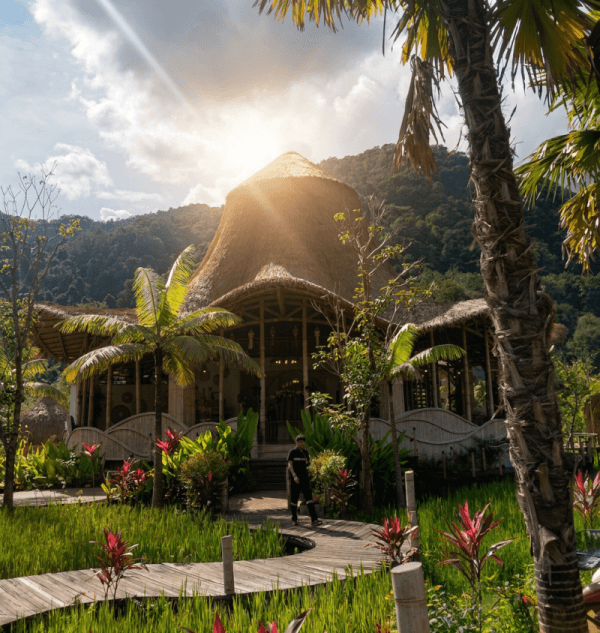
Early commitments to heritage and cultural preservations sets Nan Province apart from other touristic regions in Thailand. This overarching approach allows Nan to plan and develop infrastructures that leverage on tourism without encroaching its natural environment, an unfortunate situation often seen in other regions in Thailand.
For Nan, this is an effective mitigation of a vicious cycle of pollution, overcrowding, heritage loss and a homogenous culture solely built on economic gains.
Phukananan Resort is a space that reflect this ethos.
At Phukananan, nothing is rushed. Quiet moments are savoured through rural wanderings. From morning long walks in cold fresh crisp air to cycling through the golden rice fields in sun sets. Meals are curated and prepared to reflect the essence of Northern Thai culinary culture and sourced directly from local farming communities to procure the freshest of ingredients. A walk around the resort’s vicinity reveals a surreal and whimsical setting built out of authenticity to create the best mountain living experience.
Each villa features a vestibule in the living area that opens out to a spacious veranda with an open bath feature surrounded by mountain rural charm. A closer look at its interior reveals meticulous and fine architecture mastery. From using traditional building techniques and manual dexterity of materials like teak wood and bamboo to the clever blends of Lanna’s heritage trade crafts by local artisans, the space reflects a seamless fusion of modern quiet luxury with traditions.
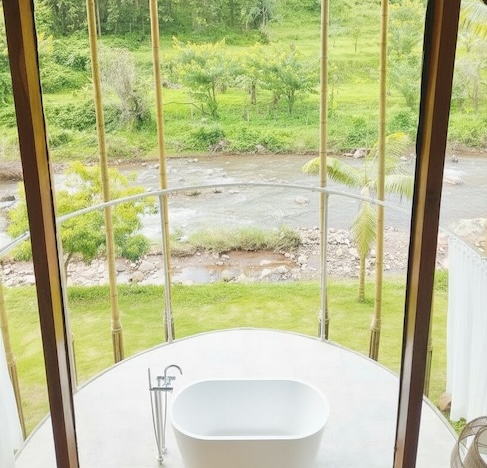
Here at Phukananan, its indigenous Lanna culture and Thai heritage collide in an exclusive world of relaxation and luxury, defined by slow living in authenticity.
Traveller Tip | The open bath feature is the best amenity to have in the room. 5pm is the best time to use it to indulge in natural wilderness with mountains and a river stream just right in front of you. The resort also provides a bubble bath machine tool upon request to speed up the bath foam making process
Nan Province’s Thriving Coffee Culture: Speciality Brews Straight From The Highlands
Best for: | Coffee connoisseurs, agritourism and foodie travel
How is a slow life complete without a good cup of coffee to gaze out to during misty mornings? In Thailand, coffee production in the highlands was initially introduced as an alternative economic crop for farmers. The superior quality of these flavorful beans cultivated on high altitudes, together with initiatives to channel direct tourism dollars to support local farming communities has catapulted coffee production as a key component in Thailand’s ecotourism and agricultural sustainability.
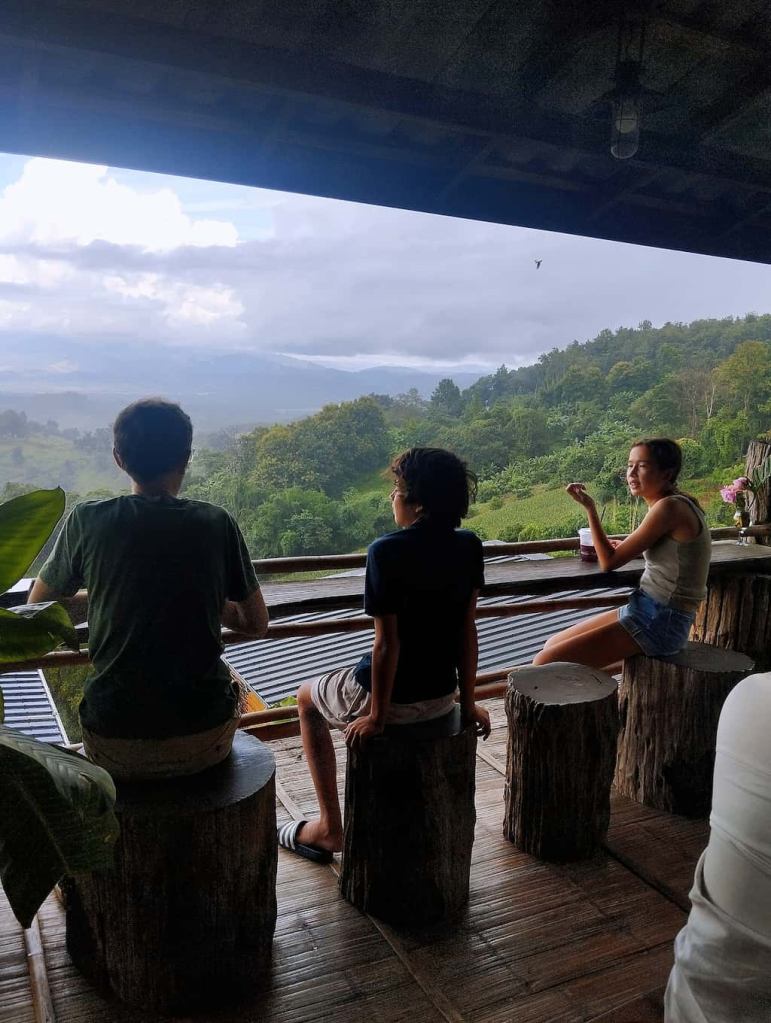
Unlike commercialized coffee hubs saturated in Chiang Mai, Nan positioned their brews as high quality specialty beans cultivated in the highlands. Local communities in different Nan regions also created their own special flavors to anchor their own regional identities and tourism appeal to draw in coffee connoisseurs.
In Nan, drinking coffee is a ritual in its own right. An indulgence where the highest quality of brews straight from the highlands are paired with a spectacular mountain view, making it one of the most memorable coffee experiences in Thailand.
Doi Phu Kha National Park – Trekking, Camping & Adventure In Nan’s Wilderness
Best For: | Hiking, camping, wildlife, nature photography, stargazing
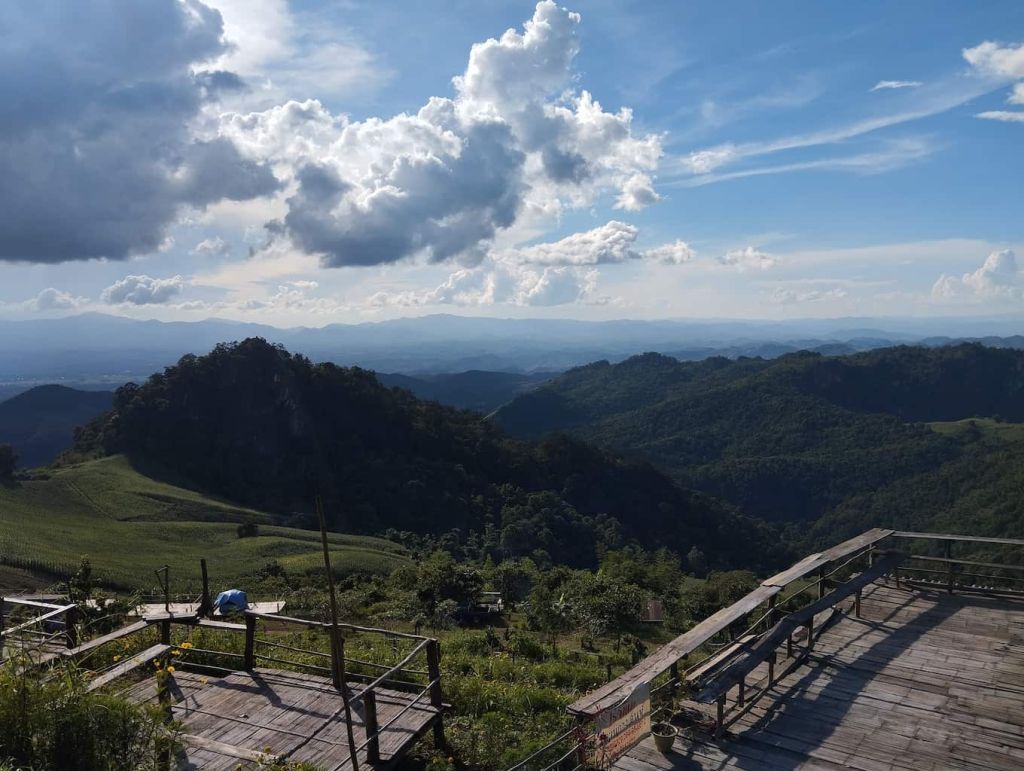
Perched on the peak of Doi Phu Kha National Park, high up above the clouds, mountains ranges seemingly dropping from both sides with a breathtaking view of sunrise from the left then sunset from the right and yet another panoramic view of the rice fields dotted with villages just below.
One could easily trace the meandering outlines of the river source down the valleys, tirelessly irrigating the fields and keeping the farming communities together one decade at a time. When night falls, Doi Phu Kha transforms into mesmerizing stargazing grounds under the sprawling night skies.
Nan is home to seven national parks and is highly regarded for its remote, mountainous landscape and jungle-clad scenery. Located along the 280km Luang Prabang mountain range and straddling the borders between North-western Laos and Northern Thailand, Doi Phu Kha national park is popular and highly regarded for day hikes.
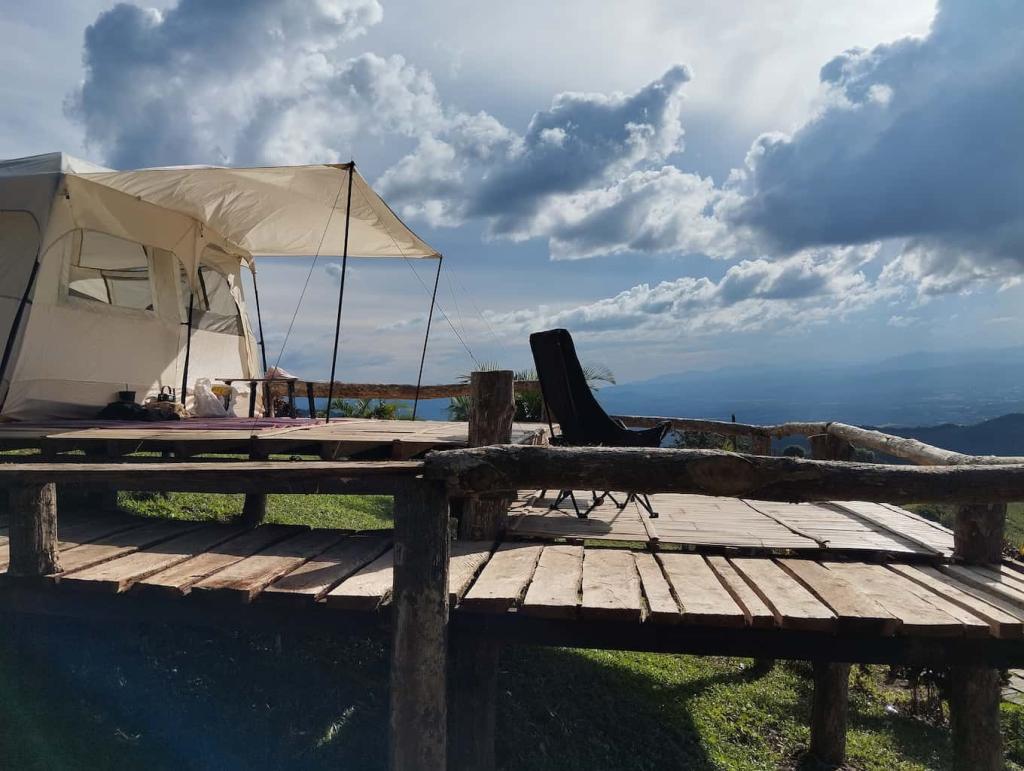
Travelers’ Tip : | Things to do and see at Doi Phu Ka National Park
Pink Blossom Season (February – March) – Home to an endangered species of trees known for their beautiful pink blooms that rival Japan’s cherry blossoms
Winter Camping / Glamping (November – December) – Best for camping during Thailand’s cool season. A variety of tents, well equipped camping facilities and amenities are available for rent upon request.
White water raftings (All year round) A day of guided white water rafting brings you into the heart of Nan’s wilderness into the most remote of valleys surrounded by jagged karst cliffs, waterfalls and jungle trails while rising and falling through a series of high adrenaline rapids.
Nan City – From Ancient Temples To Lanna Architecture, a living tale of endured traditions.
Best For: | Cultural sightseeing, temple visits, heritage, history and walking tours
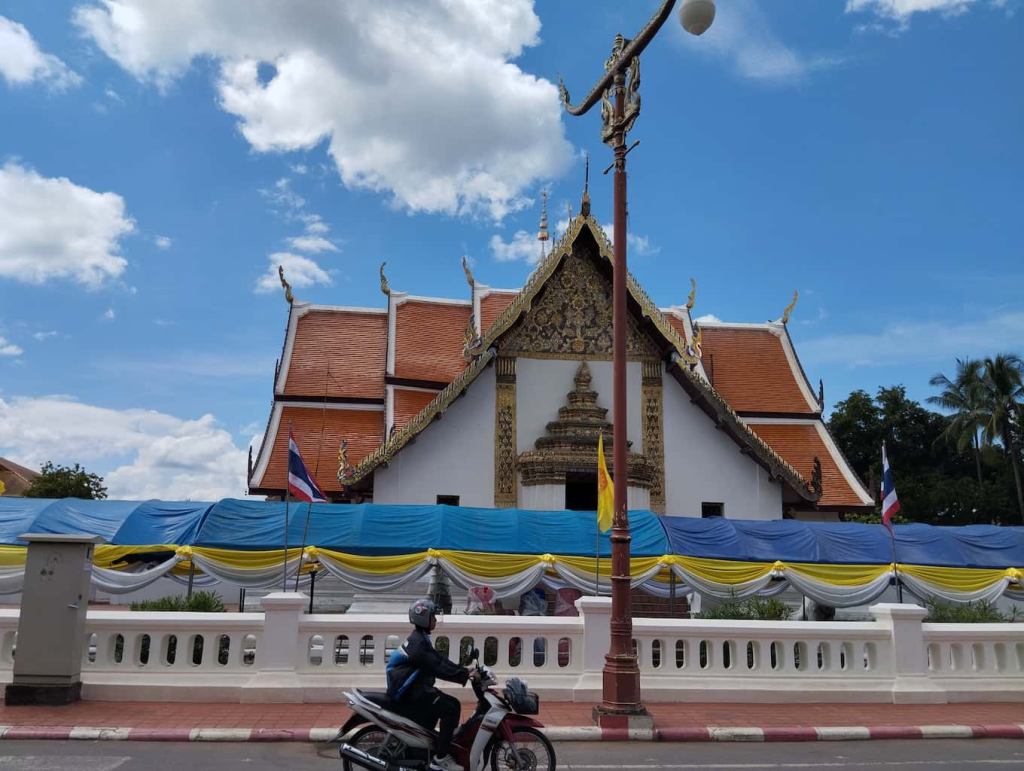
If Nan is the living soul of Lanna’s highlands where mountains reign, its city tells another living tale of endured traditions in a modern world.
A cultural heartbeat, Nan City is a living old city where heritage and traditions are preserved with fervor and in co-existence with modern cafes and restaurants. Here, Lanna styled architecture and ancient temples defined the city’s landscape.
The Wat Phu Min Temple, Nan’s Most Iconic Landmark
Located in the heart of Nan City, The Wat Phu Min Temple is Nan’s most iconic landmark. A place of worship but it is most famous for its wall murals created by a local artist of the Tai Lue origin some 150 years ago.
The temple wall murals were created in 1867 during a major restoration. Its painted walls revealed a unique and meticulous artistry of mural art depicting scenes of local life at the time. From dating scenes, courtships to romantic intimacies, the ancient wall murals are a visual and artistic expression reciting tales of its past. and remains an important historical and cultural identity to the Nan community to this day.
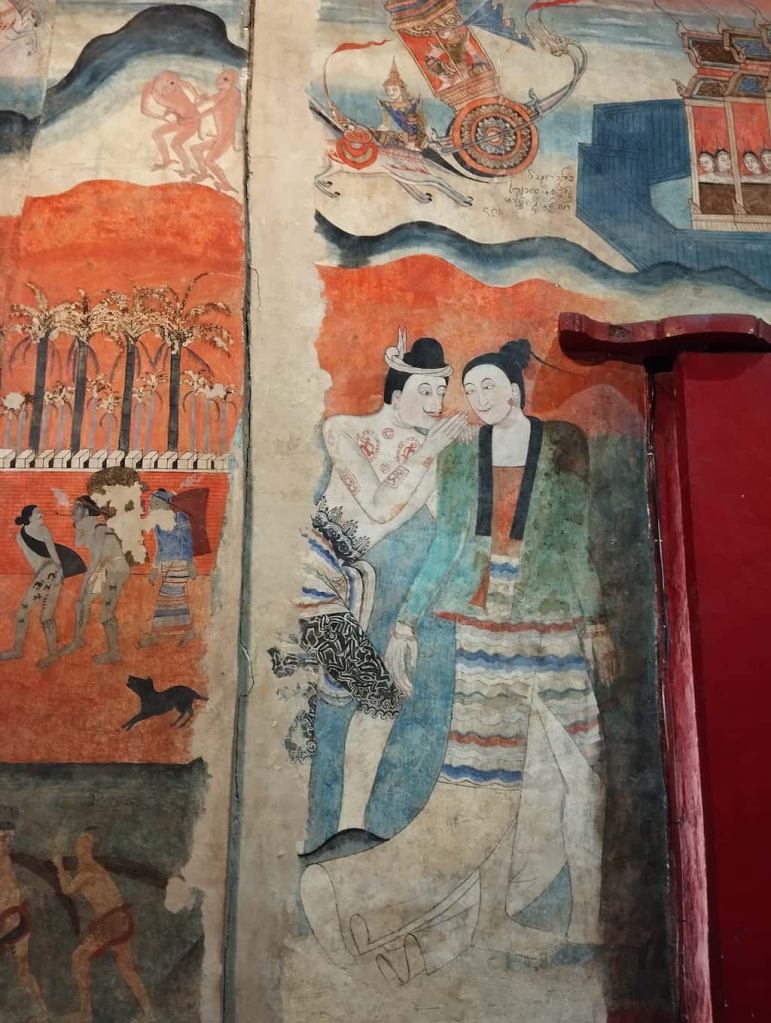
“The Whisperer” mural is the artist’s most iconic representation that has captured hearts and constantly re-adapted to several different artistic versions to reflect the timeless essence of old romantic endeavour when a man leans over to the woman’s ear to whisper as a form of eternal intimacy. Wat Phu Min is a glimpse of Nan’s secular life 150 years ago as the world moves on.
The Nan National Museum – Over A Century Of Cultural Artefacts
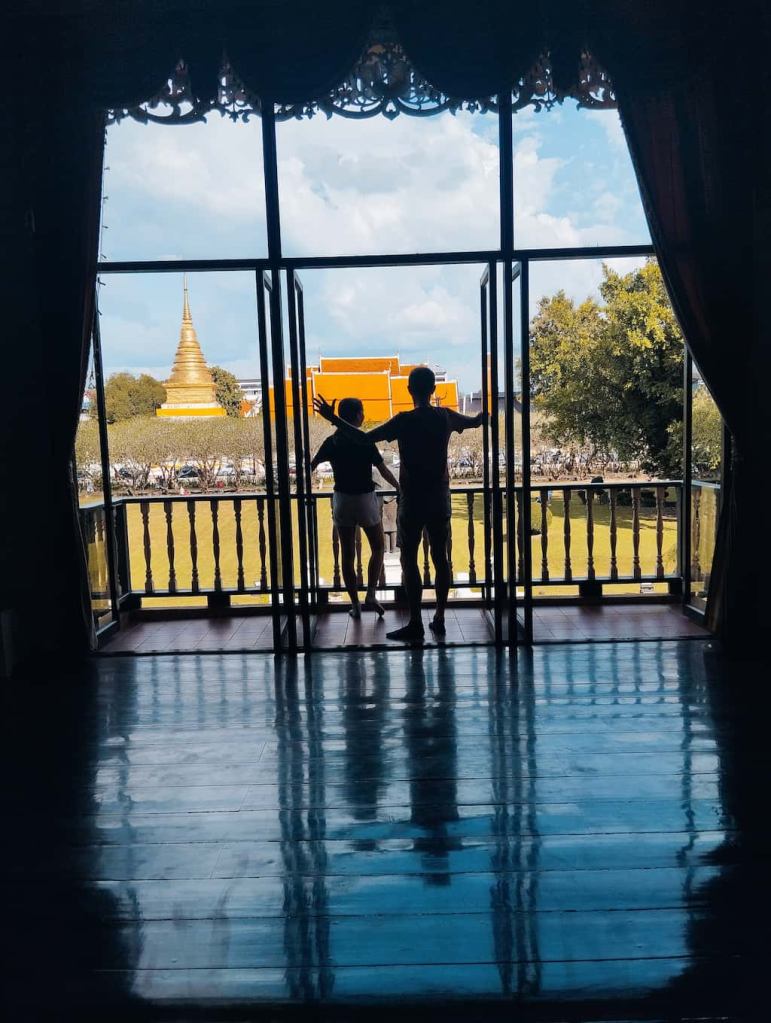
A previous royal residence of the late last ruler of Nan, houses some of the most comprehensive collections of artefacts from more than over a century.
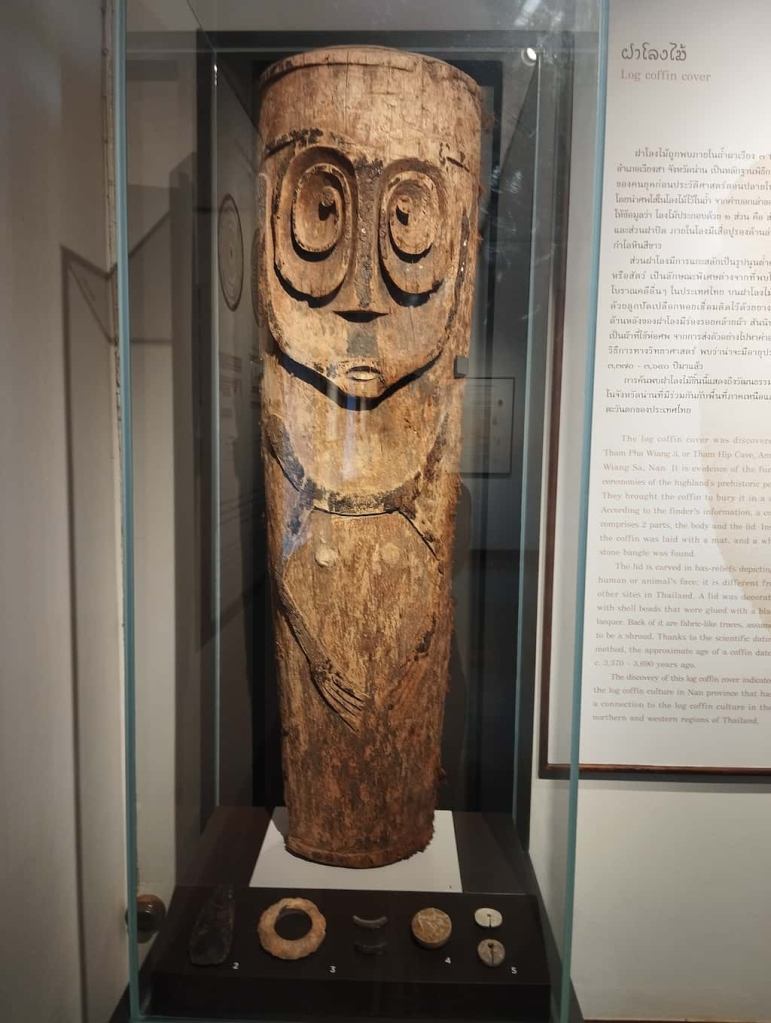
It curates extensively the region’s historical and cultural footprints of the many indigenous inhabitants of the time. Rare exhibits like the 3,000 year old prehistoric coffin lid embellished with elaborate carvings carved out from a single tree reflected a prevalent practice in Nan culture.
Log coffins had their roots traced back to the origins of ancient rituals practiced by the Chinese for religious burials. In parts of Thailand, concentrated within the Mae Hong Son region, log coffins have been discovered by archaeologists in caves and shelters.
These sightings have contributed insights and served as archaeological evidence to Northern Thailand’s indigenous migration footprints from different ethnic groups spanning across Asia.
Khanon Wan Pa Nim Thai Traditional Desserts: Edible Archives To Thailand’s History And Cultural Exchange
This beloved Thai dessert shop is housed in a two-storey traditional teak wood heritage building surrounded by a spacious veranda draped in tropical faunas and florals. What was once a private silk farming residence has transformed into one of the most atmospheric dessert enclave in the province.
Thai desserts are more than just sweet endings to meals. They are edible archives of Thailand’s history and cross-cultural exchange.
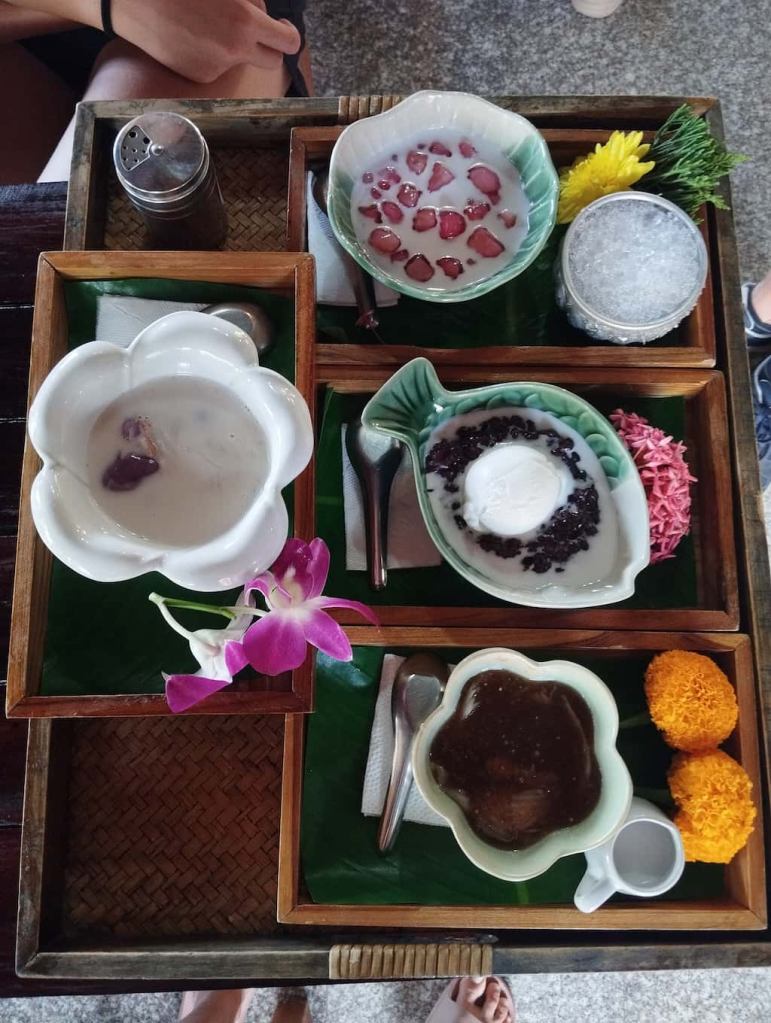
Sukhothai period from the 13-15th century: In the early beginnings, desserts were basic and meant solely for the purposes of religious offerings. A chewy texture that melts in the mouth using rice flour, combined with the creaminess and fragrance of coconut milk which are then sweetened to balance flavors with a pop of sugar. These basically made up the base ingredients synonymous with any Thai desserts. Boiling and steaming were predominantly used in early days.
Ayutthaya period from the 16th and 17th century:Thai desserts evolved further under the Portuguese influence, to include the use of eggs and baking, essentially introducing new textures and flavors.
Rattanokosin period after the 18th century: It was not until this time when the capital moved to Bangkok that desserts underwent further refinement and artistry that made their way to debut on royal palace tables. During this time, the emphasis on aesthetics and palate texture were equally celebrated. The use of nature hues from flowers infused into desserts were experimented. Butterfly pea for blue and pandan for green. It was also during this period when the famous mango sticky rice became a rice masterpiece and anchored its identity as a global symbol of Thai cuisine in the modern era till this day.
Over the years, Thai desserts embarked on a trajectory of varied transformations, keeping the essence alive while adapting to evolving influences and taste of the time.
At Khanon Wan Pa Nim, the enduring patience and meticulous preparation required of these sweet treats are preserved with fervor. It lets you into a taste of the past that have graced Thai tables for centuries while some, even served as important cultural testaments in Thailand’s history.
How Nan Province became the epitome of Thailand’s best destination for Responsible And Regenerative Tourism
Nan Province is more than just a destination. It is Thailand’s epitome of regenerative and responsible tourism done right.
In 2024, Bo Suak village became the first in Thailand to be awarded Best Tourism Villages by the United Nations Tourism. Its community based tourism, from traditional weaving, pottery to culinary experiences brought its heritage and traditions into the spotlight. The revival of this little known village has also given rise to the returns of younger generations to contribute to the community by producing local products and building boutique resorts.
Just over a year later, UNESCO welcomed Nan Province to join as part of its prestigious creative cities network, positioning Thailand’s cultural heritage on the global stage.
Like a well preserved family heirloom, Nan is cherished not just for its age but for the way it still functions, bringing the community together in modern times through traditions. Nan reminds travellers that the most profound travel experiences are in the quiet observations of life lived with intention.
Nan Province Travel FAQ
When is the best time to visit Nan Province, Thailand?
The cool season from November to February is ideal, offering comfortable temperatures, clear skies and the best conditions for hiking and camping. February and March bring the added spectacle of pink blossoms at Doi Phu Kha National Park.
How do I get to Nan Province?
Nan has a small domestic airport with connections from Bangkok (Don Mueang). By road, Nan is approximately 7–8 hours from Chiang Mai via Highway 101, or around 11 hours from Bangkok. The drive through the mountains is scenic and highly recommended if time allows.
Is Nan Province suitable for luxury travellers?
Yes. Nan is actively developing its luxury eco-resort segment — with properties like Phukananan Resort offering a high-end slow travel experience that combines world-class comfort with authentic cultural immersion and nature access.
What makes Nan Province different from Chiang Mai?
Where Chiang Mai is Thailand’s established northern tourism hub, Nan is deliberately uncrowded, sustainability-focused and culturally intact. It offers a depth of heritage experience — from ancient salt traditions to UNESCO-recognised creative culture — within a pristine natural environment that Chiang Mai’s popularity has made increasingly difficult to find.


